Gathering the gems worth your time…
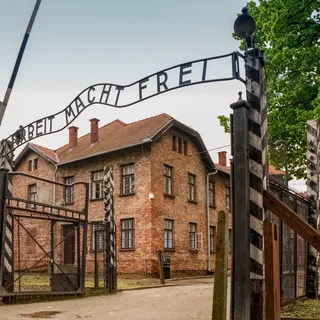
Destination guide
Auschwitz-Birkenau
Poland
Auschwitz-Birkenau is the generic name given to the cluster of concentration, labour and extermination camps established by the Nazis during the Second World War and located near the towns of Oświęcim and Brzezinka in southern Poland, some 60 km from Kraków.
Introduction quoted from Wikivoyage, CC BY-SA
Sources gathered & checked yesterday
At a glance
- Best time to go
- April–October
- Getting around
- Between camps
- Vetted picks
- 6 places to see, do, eat, and stay
- Real coverage
- 8 vetted creator sources
AI insights
Computed from the Wikivoyage listings, transport section and YouTube view counts on this page
Auschwitz I is named by 2 of the travel videos we checked — the clearest signal we have that they are worth your time.
The most-viewed guide here is "NARRATED TOUR OF AUSCHWITZ I AND AUSCHWITZ II BIRKENAU" by RailFan Films (1.8M views) — a solid first watch.
Getting around: between camps — the section below has the details straight from Wikivoyage.
How these 6 picks are sourced
3 of 6 are named by a second, independent source — Auschwitz-Birkenau Memorial and Museum (auschwitz.org) and Wikipedia — and each card names its own. The remaining 3 rest on the reference article alone: we list them because Wikivoyage or Wikipedia documents them, not because anyone else vouched for them. We also watched 8 creator videos. 3 of the 6 descriptions are quoted word for word from Wikivoyage under CC BY-SA rather than written by us, as is the introduction above — each of those cards says so. What we add is the checking, the corroboration above, and the choice of which places are worth your time at all.What we can't promise is that it's still true. Venues close, hours and prices change, and we don't re-check them — a place here closed for good and sat on this page for a year before anyone noticed. The insights are AI-written from these sources and can be wrong too. Confirm anything you'd be sorry to be wrong about before you set out. Terms.
Watch first
Ranked by views and how well each landed with the people who watched it, judged against the other coverage of this place — plus a local creator where we found one.

NARRATED TOUR OF AUSCHWITZ I AND AUSCHWITZ II BIRKENAU
RailFan Films · 1.8M views

A Visit to Auschwitz-Birkenau – the Death Factory of the Holocaust
DW Travel · 1.4M views

Oświęcim, Poland: Auschwitz-Birkenau - Rick Steves’ Europe
Rick Steves' Europe · 278K views
WHAT YOU NEED TO KNOW AND EXPECT WHEN VISITING AUSCHWITZ // Auschwitz, Poland
Passport Two · 56K views

Auschwitz & Birkenau (Watch this before you Book!! ⚠️) Tips & Tricks to Avoid Problems
Travel with Col · 12K views

Visiting AUSCHWITZ with NO GUIDE / was it worth it?
Kyle and Madie · 18K views

Visiting Auschwitz - all you need to know
Historia nie jest nudna · 7K views

Auschwitz Tickets Sold Out Online? You Can Still Visit, Here's How! 🇵🇱
The Vlogs Bollox · 6K views
Best time to go
Best window: April–October
January is the month to avoid — cold. The window below is when it is genuinely pleasant.
Jan
Feb
Mar
Apr
May
Jun
Jul
Aug
Sep
Oct
Nov
Dec
IdealGoodOkayOff-season
Rated from ten years of daily temperature and rainfall recorded at this destination, via Open-Meteo's ERA5 reanalysis. Hover a month for its real numbers.
Getting around
Between camps
There is a free shuttle bus between Auschwitz and Birkenau. In the summer, it runs every 8 minutes, and during winter, every 20 minutes.
Transport notes from Wikivoyage, CC BY-SA 4.0.
What to see
Places are listed from Wikivoyage and our own sourced research. Worth it means a second, independent source names the place too; “3 sources agree” means three or more do — and each card names them, so you can check. Single source means the opposite, said plainly: the reference article lists it and nothing else we checked does.
Auschwitz I (Main Camp)
Worth itAlso recommended by Auschwitz-Birkenau Memorial and Museum (auschwitz.org) and 1 other
The original camp's brick blocks now hold the permanent exhibitions of confiscated belongings, photographs, and prisoner artwork that document the systematic murder of over a million people here.
Vetted sources
Auschwitz II-Birkenau
Worth itAlso recommended by Auschwitz-Birkenau Memorial and Museum (auschwitz.org)
The much larger killing center two miles away, where the rail platform, barrack ruins, and the wreckage of the gas chambers and crematoria remain largely as the retreating SS left them.
Vetted sources
Auschwitz I
Single sourceThe first camp to be used (therefore called Stammlager, 'main camp' in German). It is in a far more complete state than Birkenau, but is also much smaller.
Description quoted from Wikivoyage, CC BY-SA
Vetted sources
Main Building
Single sourceThe entrance to Auschwitz I has a museum with a cinema where a 15-minute film is shown, shot by Ukrainian troops the day after the camp was liberated.
Description quoted from Wikivoyage, CC BY-SA
Vetted sources
What to do
Guided study visit of the Memorial
Worth itAlso recommended by Auschwitz-Birkenau Memorial and Museum (auschwitz.org)
A roughly 3.5-hour guided walk through both camps led by museum-trained educators, the format the memorial itself recommends over an unguided visit.
Vetted sources
Anniversary of Liberation of Auschwitz
Single sourceJanuary 27 (International Holocaust Remembrance Day). Official commemoration with Auschwitz survivors and Israeli, Polish and other officials.
Description quoted from Wikivoyage, CC BY-SA
Vetted sources
Build your day
Pick the places you want in Auschwitz-Birkenau, Poland and we will put them on a map in an order that does not cross the city twice.
Where to next
Nearby cities in Poland we’ve vetted too.
- KrakówPoland's former royal capital, with Wawel Castle, Europe's largest medieval market square, and the gateway to Auschwitz.
- Wieliczka Salt MineA 13th-century working salt mine descending 300 meters, with chapels and chandeliers carved entirely from salt.
- ZakopaneGateway to the jagged Tatra Mountains and the wooden highland architecture of Poland's winter capital.
- WrocławA city of a hundred bridges and hidden bronze dwarf statues, now home to Michelin-starred BABA.
- WarsawA meticulously rebuilt Old Town after WWII devastation, now paired with a fast-rising modern dining scene.
- PoznańOld Market Square famed for its mechanical butting goats atop the Renaissance town hall.
Travel content from Wikivoyage, CC BY-SA 4.0. Encyclopedic context from Wikipedia, CC BY-SA 4.0. Videos via the YouTube Data API.