Gathering the gems worth your time…
Destination guide
Naxos
Greece
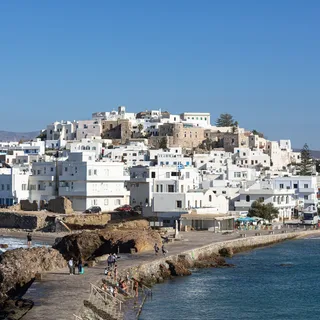
Naxos (Greek: Νάξος) is the largest in the Cyclades island group in the Aegean Sea and was the centre of ancient Cycladic culture. The most fertile of the Cyclades islands, Naxos earns much of its income from agriculture.
Introduction quoted from Wikivoyage, CC BY-SA
At a glance
- Best time to go
- Any time — the weather is kind all year
- Getting around
- Bus · Walking · Cycling
- Vetted picks
- 24 places to see, do, eat, and stay
- Real coverage
- 6 vetted creator sources
AI insights
Computed from the Wikivoyage listings, transport section and YouTube view counts on this page
The most-viewed guide here is "Νάξος - ταξιδιωτικός οδηγός" by tripment (135K views) — a solid first watch.
tripment is a creator from here, not a visiting channel — worth watching for what the guidebooks skip.
Getting around: bus, walking, cycling and 1 more — the section below has the details straight from Wikivoyage.
6 of the places below list a real price from their own source — worth a scan before you budget the trip.
How these 24 picks are sourced
9 of 24 are named by a second, independent source — Lonely Planet, Travel.gr and THAT GREEK GUY, and 1 other — and each card names its own. The remaining 15 rest on the reference article alone: we list them because Wikivoyage or Wikipedia documents them, not because anyone else vouched for them. We also watched 6 creator videos, 1 of them from local channels rather than visiting ones. 15 of the 24 descriptions are quoted word for word from Wikivoyage under CC BY-SA rather than written by us, as is the introduction above — each of those cards says so. What we add is the checking, the corroboration above, and the choice of which places are worth your time at all.What we can't promise is that it's still true. Venues close, hours and prices change, and we don't re-check them — a place here closed for good and sat on this page for a year before anyone noticed. The insights are AI-written from these sources and can be wrong too. Confirm anything you'd be sorry to be wrong about before you set out. Terms.
Watch first
Ranked by views and how well each landed with the people who watched it, judged against the other coverage of this place — plus a local creator where we found one.

Νάξος - ταξιδιωτικός οδηγός
tripment · 135K viewsLocalel

Naxos, Greece 🇬🇷 2026 – The Ultimate Island Guide (Beaches, Food & Hidden Gems) | Νάξος
THAT GREEK GUY · 66K views

Naxos Greece Travel Guide | Best Beaches, Villages & Things To Do
Greece Travel Guide · 25K views

Naxos Greece 2025 Travel Guide: Things to Do, Best Beaches, How to Get Around & Where to Stay
7 Continents 1 Passport · 24K views

🇬🇷 My Lazy Guide to Naxos Island, Greece, Great Value Greek Island
Greece Explored 🇬🇷 · 8K views

Naxos Greece Travel Guide
2 Traveling Lovers · 8K views
Best time to go
Best window: Any time — the weather is kind all year
Kind weather all year — there is no month to avoid.
Jan
Feb
Mar
Apr
May
Jun
Jul
Aug
Sep
Oct
Nov
Dec
IdealGoodOkayOff-season
Rated from ten years of daily temperature and rainfall recorded at this destination, via Open-Meteo's ERA5 reanalysis. Hover a month for its real numbers.
Getting around
Bus
There are 10 local bus lines serving Naxos, information: https://naxosbuses.com/bus-lines/ Every village has a bus service, but there may only be 3 buses a day.
Walking
In Chora, many areas are pedestrianised, making it easy to amble from beach to cafe to shop. Outside Chora, there are many footpaths, but they are not always easy to follow. Footpaths up Zas are easy and clearly marked.
Cycling
Naxos has started to develop a cycling culture, with more cycling-minded people visiting. Cycle hire is possible. Simpler mountain bikes can be rented from many "rent a car" or "rent a motorbike" shops.
Cars, scooter and quad bikes
The roads are very well maintained, with extensive repairs and upgrades carried out within the last 10 years. The mountain roads are windy, with steep drops, and frequent shrines, normally above a burnt out car that hasn't been recovered.
Transport notes from Wikivoyage, CC BY-SA 4.0.
What to see
Places are listed from Wikivoyage and our own sourced research. Worth it means a second, independent source names the place too; “3 sources agree” means three or more do — and each card names them, so you can check. Single source means the opposite, said plainly: the reference article lists it and nothing else we checked does.
Museum of Naxos Ancient Town
Worth itAlso recommended by THAT GREEK GUY and 1 other
A small museum, built on top of the excavated sites, where an ancient Mycenaean town of the 11th century B.C. was found.
Description quoted from Wikivoyage, CC BY-SA
Vetted sources
Portara (Temple of Apollo)
Worth itAlso recommended by Lonely Planet
A single 20-ton marble gateway on its own islet, all that survives of an unfinished 6th-century BC temple, and the island's iconic sunset-watching spot.
Vetted sources
Kastro
Worth itAlso recommended by Lonely Planet
The hilltop Venetian quarter of Naxos Town, built in part from recycled temple marble, with narrow lanes still lived in by descendants of the old Catholic families.
Vetted sources
Della Rocca-Barozzi Venetian Museum
Worth itAlso recommended by Lonely Planet
A lived-in Venetian tower house in the Kastro where a family heir gives tours through rooms of period furniture and family portraits.
Vetted sources
Chalki (Halki)
Worth itAlso recommended by Lonely Planet
The island's former capital in the Tragea olive valley, home since 1896 to the Vallindras Distillery, where you can taste kitron liqueur made from the local citrus.
Vetted sources
Apollo Temple's entrance
Single sourceThe most recognizable landmark and the symbol of Naxos, an iconic 6th century BC marble gate on the islet of Palatia in Naxos harbor.
Description quoted from Wikivoyage, CC BY-SA
Vetted sources
The Castro (old, walled city) section
Single sourceon elevated ground overlooking the harbour
Provides some of the quietest and most photogenic alleyways in town. It was built by the Venetians in the early 13th century and remains one of the few surviving medieval towns in Greece.
Description quoted from Wikivoyage, CC BY-SA
Vetted sources
Theatrical museum of Iakovos Kambanelis
Single sourceMuseum dedicated to the poet, playwright, lyricist and novelist Iakovos Kambanelis, born in 1922 in Naxos.
Description quoted from Wikivoyage, CC BY-SA
Vetted sources
Chapel of the Duke of Naxos
Single sourceRoman Catholic Cathedral (13th century), with a display of family crests and ornately painted capitals
Description quoted from Wikivoyage, CC BY-SA
Vetted sources
Greek Orthodox Cathedral
Single sourceWhich boasts a wealth of marble ornamentation.
Description quoted from Wikivoyage, CC BY-SA
Vetted sources
What to do
Agios Prokopios Beach
Worth itAlso recommended by Lonely Planet
Stopped here on camera: THAT GREEK GUY
The west coast's most-loved strip of soft sand and clear water, backed by just enough tavernas to stay easy rather than built-up.
Vetted sources
Blue Fin Divers wreck dive
Worth itAlso recommended by Lonely Planet
A PADI centre running dives out to a sunken WWII British Beaufighter bomber, one of the more unusual wreck dives in the Aegean.
Vetted sources
What to eat
Platia
Worth itAlso recommended by Travel.gr
A family-run taverna on Galini's square cooking home-style Naxian dishes with vegetables grown by the owners themselves.
Vetted sources
Petrino
Worth itAlso recommended by Travel.gr
A sand-side spot at Maragas beach serving fish straight off the boats alongside slow-cooked stews and an all-Greek wine list.
Vetted sources
Scirocco Cafe & Restaurant
Single sourceIn the court square, at the centre of town
A family-run business founded by brothers Nikos and Michalis (their mother Katerina runs the kitchen), serving good food made with fresh ingredients in generous portions at reasonable prices.
Description quoted from Wikivoyage, CC BY-SA
Vetted sources
Apolafsi
Single sourceBeautiful Naxian cuisine made with fresh produce, all homemade by Voula. Great views to enjoy a romantic evening.
Description quoted from Wikivoyage, CC BY-SA
Vetted sources
ΤΑΒΕΡΝΑ Ο ΤΖΩΝΝΗΣ
Single sourceLocated in Sagri, a traditional village with hospitable residents. It uses local, fresh ingredients.
Description quoted from Wikivoyage, CC BY-SA
Vetted sources
O ΓΙΩΡΓΗΣ
Single sourceIn Melanes village just 7 km outside Hora is a family restaurant with a magnificent view of a green valley.
Description quoted from Wikivoyage, CC BY-SA
Vetted sources
Where to stay
Lagos Mare Hotel
Single source3 km from Naxos town· Expensive
A four-star hotel with 28 rooms and 2 suites, offering indulgences such as private hamam steamrooms.
Description quoted from Wikivoyage, CC BY-SA
Vetted sources
Hotel Naxos Resort
Single sourceSaint George, Naxos Town· Expensive
Island and Venetian architectural domination with hints of blue sky and sea give the Naxos Resort.
Description quoted from Wikivoyage, CC BY-SA
Vetted sources
Adriana Hotel
Single sourceAgios Prokopios· Pricey
Family managed hotel, quiet location of Agios Prokopios, view of white sandy beaches.
Description quoted from Wikivoyage, CC BY-SA
Vetted sources
Korali Hotel
Single sourceSaint George Beach· Expensive
12 rooms in proximity to Naxos town (Chora) centre.
Description quoted from Wikivoyage, CC BY-SA
Vetted sources
A1 Soula Hotel
Single sourceSaint George Beach· Moderate
A friendly family-run hotel 2 minutes walk from Naxos town center.
Description quoted from Wikivoyage, CC BY-SA
Vetted sources
Plaka Camping
Single sourcesouth of Agia Anna
camping with own tent, extrafor tent hire.
Vetted sources
Build your day
Pick the places you want in Naxos, Greece and we will put them on a map in an order that does not cross the city twice.
Where to next
Nearby cities in Greece we’ve vetted too.
- ParosCycladic island balancing Parikia's marble-paved lanes with the windsurfing beaches of Naousa.
- MykonosWhitewashed Cycladic town famed for its windmills, and the beach-club nightlife of Psarou and Paradise Beach.
- SantoriniCaldera-rim villages of Oia and Fira with blue-domed churches perched above a collapsed volcanic crater.
- MilosVolcanic island with lunar-white Sarakiniko rock formations and the multicolored fishing village of Klima.
- HydraCar-free Saronic Gulf island of stone mansions climbing from a horseshoe harbor, reached by donkey and water taxi.
- AthensThe Acropolis and Parthenon anchor a capital that now also holds Greece's only Michelin two-star restaurant, Delta.
Travel content from Wikivoyage, CC BY-SA 4.0. Encyclopedic context from Wikipedia, CC BY-SA 4.0. Videos via the YouTube Data API.