Gathering the gems worth your time…
Destination guide
Parma
Italy
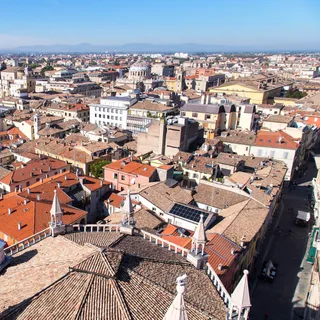
Parma is a city in the province of Parma, part of the Emilia-Romagna region of Italy. Parma is famous for its food and rich gastronomical tradition: two of its specialties are Parmigiano Reggiano cheese (also produced in Reggio Emilia) and Prosciutto di Parma ("Parma ham").
Introduction quoted from Wikivoyage, CC BY-SA
Sources gathered & checked 6 days ago
At a glance
- Best time to go
- March–May and September–October
- Vetted picks
- 16 places to see, do, eat, and stay
- Real coverage
- 6 vetted creator sources — mostly locals
AI insights
Local-ledTripest editorial research (YouTube travel guides, published guides)
Parma's holy trinity is Prosciutto di Parma, Parmigiano Reggiano and the rarer Culatello di Zibello — order a tagliere of all three with torta fritta (puffy fried dough squares).
Da Pepèn, open since 1953, is the local institution for a counter-ordered panino — the pesto cavallo (raw horse-meat) sandwich is the signature, and locals eat it standing up.
Ai Due Platani holds a Bib Gourmand and tops most 'best trattorie in Italy' lists, but it's outside the center and tables must be booked well ahead.
Tortelli d'erbetta — square parcels of ricotta and chard dressed with butter and Parmigiano — is the pasta Parma actually eats, best with a chilled Lambrusco.
Book an early morning visit to a Parmigiano Reggiano dairy in the hills: cheesemaking starts at dawn, so tours begin early to catch the curds being lifted.
Parma's cultural core is compact — the Romanesque Duomo, the pink-marble Baptistery and the vast Pilotta complex are all a short walk apart.
How these 16 picks are sourced
3 of 16 are named by a second, independent source — Gambero Rosso and Luigi's Travel Tips — and each card names its own. The remaining 13 rest on the reference article alone: we list them because Wikivoyage or Wikipedia documents them, not because anyone else vouched for them. We also watched 6 creator videos, 4 of them from local channels rather than visiting ones. 14 of the 16 descriptions are quoted word for word from Wikivoyage under CC BY-SA rather than written by us, as is the introduction above — each of those cards says so. What we add is the checking, the corroboration above, and the choice of which places are worth your time at all.What we can't promise is that it's still true. Venues close, hours and prices change, and we don't re-check them — a place here closed for good and sat on this page for a year before anyone noticed. The insights are AI-written from these sources and can be wrong too. Confirm anything you'd be sorry to be wrong about before you set out. Terms.
Watch first
Ranked by views and how well each landed with the people who watched it, judged against the other coverage of this place — plus a local creator where we found one.
Top 10 cosa vedere a Parma
Come si viaggia · 54K viewsLocalit
Visit Parma - Italy: Things to Do - What, How and Why to enjoy it (4K)
Luigi's Travel Tips · 81K views

PARMA - Cose da vedere e fare in qualche ora in città! GUIDA VELOCE
il canale di ALE · 8K viewsLocalit

Parma, Italy Travel Guide: Must-See Spots for Your Bologna Day Trip
MY Travel BF · 22K views
VISITARE PARMA IN UN GIORNO
PortaleMondo - Viaggi & Racconti · 4K viewsLocalit

TOP 5 COSE DA VEDERE A PARMA: GUIDA COMPLETA
Nuovevacanze · 3K viewsLocalit
Best time to go
Best window: March–May and September–October
No month to avoid, though the shoulder seasons are the pick.
Jan
Feb
Mar
Apr
May
Jun
Jul
Aug
Sep
Oct
Nov
Dec
IdealGoodOkayOff-season
Rated from ten years of daily temperature and rainfall recorded at this destination, via Open-Meteo's ERA5 reanalysis. Hover a month for its real numbers.
Getting around
Getting around
Walk. Virtually everything in the historic city centre is within easy and leisurely walking distance. Sites across the river require a little more walking but still not too much. The terrain is flat and biking is very popular among the locals.
Transport notes from Wikivoyage, CC BY-SA 4.0.
What to see
Places are listed from Wikivoyage and our own sourced research. Worth it means a second, independent source names the place too; “3 sources agree” means three or more do — and each card names them, so you can check. Single source means the opposite, said plainly: the reference article lists it and nothing else we checked does.
Palazzo della Pilotta
Worth itAlso recommended by Luigi's Travel Tips
· Cheap
The palace was named after the Basque ball game pelota once practised in one of the courtyards. It is a 16th-century complex of buildings constructed as court to the famed Renaissance Farnese family.
Description quoted from Wikivoyage, CC BY-SA
Vetted sources
Cattedrale di Santa Maria Assunta
Single sourcePiazza Duomo
The cathedral and the adjacent baptistery were built in the late 12th century. The frescoes inside the building are very moving, as well as the relief sculptures on the interior stone.
Description quoted from Wikivoyage, CC BY-SA
Vetted sources
Battistero di San Giovanni
Single sourceThe baptistery was designed by Benedetto Antelami and is constructed from a pink marble called rosso di Verona. The marble appears to change color depending on how the sun hits it.
Description quoted from Wikivoyage, CC BY-SA
Vetted sources
Palazzo di Riserva
Single sourceDuring the Bourbon times it was a palace for important guests. It now hosts Poste centrale (central Post office), Società parmense di Lettura (Parma Literary society) and the Museo Glauco Lombardi.
Description quoted from Wikivoyage, CC BY-SA
Vetted sources
Palazzo Episcopale
Single sourcePiazza Duomo, 1
The Bishop's palace has a Romanesque appearance. Its construction began in the 11th century, then continued in the 15th, with some restorations made during the course of the 20th century.
Description quoted from Wikivoyage, CC BY-SA
Vetted sources
Camera di San Paolo
Single sourceVia Melloni, 3/A· Moderate
A part of a former apartment of the abbess of the Benedectine Convent of Saint Paul. It's decorated by distinctive Renaissance frescoes.
Description quoted from Wikivoyage, CC BY-SA
Vetted sources
What to eat
Ai Due Platani
Worth itAlso recommended by Gambero Rosso
A contemporary trattoria built entirely on Parma's own territory and ingredient quality.
Vetted sources
Cocchi
Worth itAlso recommended by Gambero Rosso
Open since 1925 — a long roster of Parma salumi with torta fritta, the city's charcuterie benchmark.
Vetted sources
Hotel & Ristorante Leon D'oro
Single sourceV.le Fraiit 4a
A family-owned restaurant that has been around since 1917. They serve traditional food near the train station and are more of a local place as opposed to a tourist location.
Description quoted from Wikivoyage, CC BY-SA
Vetted sources
Trattoria Corrieri
Single sourcenear the law faculty of the university
A typical restaurant to have dinner. Try some torta fritta, and prosciutto di Parma and all the other salami and coppa specialities from that region as a starter, followed by the typical tortelli.
Description quoted from Wikivoyage, CC BY-SA
Vetted sources
La Forchetta
Single sourceBorgo San Biagio 6/D· Expensive
Excellent ristorante just off the Piazza del Duomo serving typical regional cuisine.
Description quoted from Wikivoyage, CC BY-SA
Vetted sources
Trattoria del Tribunale
Single sourceVicolo Politi 5
Excellent traditional restaurant in the city center recommended by the Slow Food editors. The guanciale (pork cheek) diavolo was tender, sweet and succulent with just the right amount of spiciness.
Description quoted from Wikivoyage, CC BY-SA
Vetted sources
K2
Single sourcebehind the cathedral on the right
An ice cream shop. The nuns make a gelato in the shape of a flower in seconds.
Description quoted from Wikivoyage, CC BY-SA
Vetted sources
Where to stay
Palazzo Dalla Rosa Prati
Single source7 Strada al Duomo.
Centrally located, with a number of elegantly appointed suites.
Description quoted from Wikivoyage, CC BY-SA
Vetted sources
Hotel Torino
Single sourceBorgo A.Mazza 7. In centre, an ancient monastery bombed during the Second World War. In the 1960s it was partially rebuilt and used as a hotel. Today, it continues its tradition of hospitality after…
Description quoted from Wikivoyage, CC BY-SA
Vetted sources
Astoria Executive Hotel
Single sourceVia Trento. This 3-star hotel is in a central position of the city, a few metres from the train station and centre. Each of the hotel's 88 rooms is soundproofed.
Description quoted from Wikivoyage, CC BY-SA
Vetted sources
Build your day
Pick the places you want in Parma, Italy and we will put them on a map in an order that does not cross the city twice.
Where to next
Nearby cities in Italy we’ve vetted too.
- ModenaBalsamic vinegar, Ferrari, and Osteria Francescana.
- BolognaItaly's food capital — ragù, tortellini, and porticoes.
- VeronaRoman arena, Romeo & Juliet, and Lake Garda nearby.
- Cinque TerreFive pastel cliff villages linked by coastal trails.
- PortofinoTiny, glamorous Ligurian fishing harbour.
- LuccaIntact Renaissance walls you can cycle around.
Travel content from Wikivoyage, CC BY-SA 4.0. Encyclopedic context from Wikipedia, CC BY-SA 4.0. Videos via the YouTube Data API.