Gathering the gems worth your time…
Destination guide
Rome
Italy
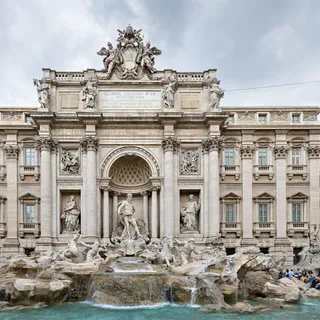
Rome (Italian and Latin: Roma), the 'Eternal City', is the capital and largest city of Italy and of the Lazio region. It's the famed city of the Roman Empire, the Seven Hills, La Dolce Vita, the Vatican City and Three Coins in the Fountain.
Introduction quoted from Wikivoyage, CC BY-SA
Sources gathered & checked yesterday
At a glance
- Best time to go
- February–May and October
- Getting around
- Public transport (ATAC) · Bus · Tram
- Vetted picks
- 32 places to see, do, eat, and stay
- Real coverage
- 9 vetted creator sources
AI insights
Tripest editorial research (YouTube travel guides, published guides)
Buy timed-entry tickets online in advance for the Colosseum, Roman Forum, and Vatican Museums — walk-up lines routinely eat hours in peak months.
Avoid restaurants right on Piazza Navona, the Trevi Fountain, and near the Vatican with red-checkered tablecloths and photo menus; walk a few streets away for the same food at half the price.
For Rome's signature pasta: Felice a Testaccio for tableside cacio e pepe, Da Enzo al 29 in Trastevere (reserve ahead), or Roscioli for carbonara.
Refill your bottle for free at the cast-iron 'nasoni' street fountains across the city — clean, cold drinking water all day.
Watch your pockets on crowded bus 64 between Termini and the Vatican (locals call it the 'wallet express'), and ignore costumed gladiators who demand money after 'gifting' you something.
Visit the Vatican Museums on a Tuesday or Thursday to dodge the worst crowds.
How these 32 picks are sourced
9 of 32 are named by a second, independent source — Rick Steves, Anthony Bourdain and Michelin Bib Gourmand, and 2 others — and each card names its own. The remaining 23 rest on the reference article alone: we list them because Wikivoyage or Wikipedia documents them, not because anyone else vouched for them. We also watched 9 creator videos, 1 of them from local channels rather than visiting ones. 23 of the 32 descriptions are quoted word for word from Wikivoyage under CC BY-SA rather than written by us, as is the introduction above — each of those cards says so. What we add is the checking, the corroboration above, and the choice of which places are worth your time at all.What we can't promise is that it's still true. Venues close, hours and prices change, and we don't re-check them — a place here closed for good and sat on this page for a year before anyone noticed. The insights are AI-written from these sources and can be wrong too. Confirm anything you'd be sorry to be wrong about before you set out. Terms.
Watch first
Ranked by views and how well each landed with the people who watched it, judged against the other coverage of this place — plus a local creator where we found one.

Ultimate Guide To Rome Italy: 3-day Itinerary For First-time Visitors!
RomeWise · 205K viewsLocal
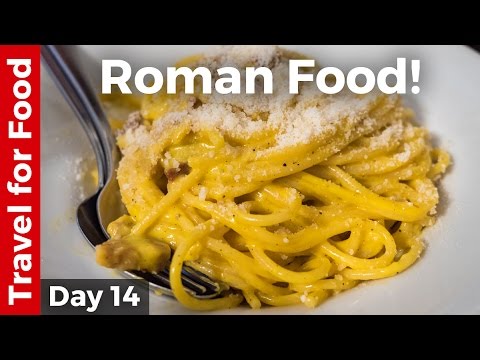
Italian Food - AMAZING ROMAN FOOD and Attractions in Rome, Italy!
Mark Wiens · 3.3M viewsFood

Incredible Pizza, Espresso, Fall-Apart Tender Oxtail, and Vatican City Attractions - ROME, ITALY!
Mark Wiens · 2.8M viewsFood
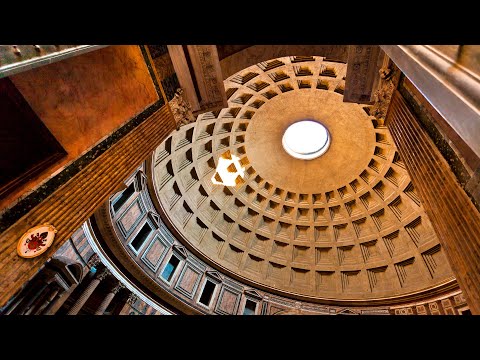
Rick Steves Rome
Rick Steves' Europe · 2.8M views

Rome Food Tour at Mercato Testaccio: Prosciutto and Buffalo Mozzarella!
Mark Wiens · 1.2M viewsFood

Pasta Cacio e Pepe - Chef Legend in Rome shares Pasta Recipe
Aden Films · 475K viewsFood

Rome, Italy: Enjoying the Passeggiata - Rick Steves Travel Guide - Travel Bite
Rick Steves' Europe · 91K views

Italy: Rome – Rick Steves Travel Talks
Rick Steves Travel Talks · 261K views
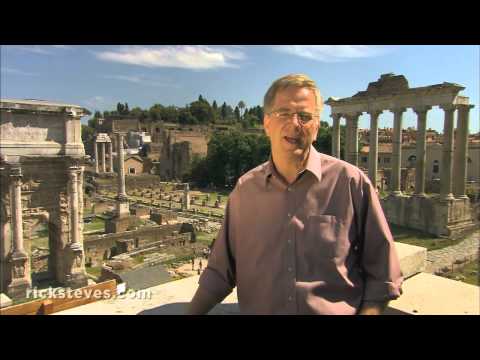
Rome, Italy: Roman Forum - Rick Steves’ Europe Travel Guide - Travel Bite
Rick Steves' Europe · 206K views
Best time to go
Best window: February–May and October
July is the month to avoid — punishing heat. The window below is when it is genuinely pleasant.
Jan
Feb
Mar
Apr
May
Jun
Jul
Aug
Sep
Oct
Nov
Dec
IdealGoodOkayOff-season
Rated from ten years of daily temperature and rainfall recorded at this destination, via Open-Meteo's ERA5 reanalysis. Hover a month for its real numbers.
Getting around
By public transport (ATAC)
ATAC operates the public transport network. There are two ways of buying public transport tickets in Rome: Tap&Go with a contactless credit/debit card (incl. on a mobile phone) or paper tickets.
Bus
Roman buses are reliable but crowded. They are the best way to get around the city (except walking). Free maps of the bus system are available. Others can be purchased (€3.5 at Termini). Signs at the bus stop list the stops for each route. Ask for assistance.
Tram
The Tram routes mostly skirt the historic centre, but there are stops convenient for the Vatican, the Colosseum, and the Trastevere area. The number 8 does run into the centre to Largo Argentina, not far from the Pantheon, and terminate at Piazza Venezia.
Metro
There are two lines that cross at Termini station: line runs northwest past the Vatican and southeast, and line runs southwest past the Colosseum and northeast in one direction, but also splits at the "Bologna" station to go due north until Jonio.
By regional rail
There is a network of regional rail lines that mostly connect to smaller towns and conurbations of Rome. Some have frequent stops within Rome too. Use the Trenitalia app to research your journey and book tickets.
Transport notes from Wikivoyage, CC BY-SA 4.0.
What to see
Places are listed from Wikivoyage and our own sourced research. Worth it means a second, independent source names the place too; “3 sources agree” means three or more do — and each card names them, so you can check. Single source means the opposite, said plainly: the reference article lists it and nothing else we checked does.
The Pantheon
Worth itAlso recommended by Michelin Bib Gourmand and 1 other
Piazza della Rotonda· Cheap
It was built in 27 BCE, by Augustus' right hand man Marcus Agrippa, and later remodeled by the Emperor Hadrian (AD 125-128).
Description quoted from Wikivoyage, CC BY-SA
Vetted sources
Isola Tiberina
Single sourceThis is the island in the middle of the Tiber River (Il Fiume Tevere) that separates Central Rome and Trastevere.
Description quoted from Wikivoyage, CC BY-SA
Vetted sources
Colosseum
Single sourcePiazzale del Colosseo / Via dei Fori Imperiali· Cheap
Known properly as the Flavian Amphitheatre, this most famous of Roman landmarks takes its name from the giant statue of the emperor Nero that once stood near this location.
Description quoted from Wikivoyage, CC BY-SA
Vetted sources
Trevi Fountain
Single sourceCompleted in 1762 to a design by Nicola Salvi, this spectacular Baroque fountain features a mythological sculptural composition of Neptune, god of the sea, flanked by two Tritons: one Triton labours to control a…
Description quoted from Wikivoyage, CC BY-SA
Vetted sources
Piazza di Spagna
Single sourceMetro Spagna, bus nr 116,117,119
The Piazza di Spagna (Spanish Square) is the most famous square in Rome.
Description quoted from Wikivoyage, CC BY-SA
Vetted sources
The Celio
Single sourceat the Caracalla end of Circo Massimo is the Porta di Capena; take the small road to the left that runs parallel to the tram line
The Celian Hill is one of the seven hills of Rome.
Description quoted from Wikivoyage, CC BY-SA
Vetted sources
What to do
Auditorium Parco della Musica
Single sourceto the north of Rome close to the Via Flaminia. Not exactly easy to reach from major tourist areas. Bus 910 and 217 from Termini Station; Linea ‘M’ special bus route between Termini Station and Auditorium, from 17:00 every 15 min on concert nights. Tram: No. 2 from Piazzale Flaminio. Trains: Metro A line to Flaminio then No.2 tram.
The Auditorium at Parco della Musica is a large complex on the north side of Rome, built on a site that was part of the 1960 Olympic area.
Description quoted from Wikivoyage, CC BY-SA
Vetted sources
Palazzo delle Esposizioni
Single sourceImposing exhibition centre half-way down Via Nazionale.· Moderate
Rotating exhibitions, usually three at one time. Exhibition descriptions normally provided in both Italian and English. Avoid Sunday morning, when the Romans go, as queues to get in can be long.
Description quoted from Wikivoyage, CC BY-SA
Vetted sources
Testaccio Market
Single sourceVia Galvani and Via Alessandro Volta
Great place to see the wide range of fresh produce available in Italy. Fish and flower stalls as well. Stock up here for picnics to sustain you while sightseeing.
Description quoted from Wikivoyage, CC BY-SA
Vetted sources
Piazza S. Maria in Trastevere
Single sourceBeautiful place to hang around and watch people going by, as well as the many buskers usually found in the square.
Description quoted from Wikivoyage, CC BY-SA
Vetted sources
Festa dell'Unità
Single sourceThis is a traditional popular festival, once organised by the Italian Communist Party to promote its official newspaper l'Unità ("Unity"), and nowadays kept by the Democratic Party.
Description quoted from Wikivoyage, CC BY-SA
Vetted sources
Get lost in Trastevere
Single sourceThe cobbled streets are narrow and winding and random but losing your way will lead you to places you might not otherwise find.
Description quoted from Wikivoyage, CC BY-SA
Vetted sources
What to eat
Pizzarium
Worth itAlso recommended by Anthony Bourdain and 1 other
Gabriele Bonci's pizza al taglio near the Vatican — thick, high-hydration dough with inventive toppings, sold by weight.
Vetted sources
Roscioli
Worth itAlso recommended by Anthony Bourdain
Deli-restaurant near Campo de' Fiori built around a counter of 350 cheeses and 150 cured meats, and a carbonara people queue for.
Vetted sources
Trattoria Da Cesare al Casaletto
Worth itAlso recommended by Gambero Rosso
Rigorously sourced Roman classics — cacio e pepe, oxtail — from Leonardo Vignoli's kitchen just outside the centre.
Vetted sources
Armando al Pantheon
Worth itAlso recommended by Michelin Bib Gourmand
Family-run since the 1960s, steps from the Pantheon, still cooking tripe and oxtail the old way.
Vetted sources
Da Enzo al 29
Worth itAlso recommended by Rick Steves
Tiny no-reservations Trastevere trattoria whose carbonara and cacio e pepe are made strictly the traditional way.
Vetted sources
Trattoria der Pallaro
Worth itAlso recommended by Rick Steves
No menu, no choice — a fixed-price kitchen that simply serves the multi-course meal it cooked that day.
Vetted sources
Seu Pizza Illuminati
Worth itAlso recommended by 50 Top Pizza
Contemporary Roman pizza with soft, long-fermented crusts near Porta Portese.
Vetted sources
Enoteca Corsi
Worth itAlso recommended by Rick Steves
Lunch-only wine bar near the Pantheon with a chalkboard of homestyle Roman dishes and no pretension.
Vetted sources
Baccanale
Single sourceVia della Lungaretta
A small bar with a great range of drinks, friendly staff and a manic display of cocktail making later on in the evening. There are several TV screens showing major sporting events.
Description quoted from Wikivoyage, CC BY-SA
Vetted sources
La Pergola
Single sourceHotel Cavalieri Hilton, Via A. Cadlolo 101
Awarded three stars in the Guide Rouge. The chef, Heinz Beck, is German in origin and has set a style which combines Italian fresh produce with exceptional creativity and presentation.
Description quoted from Wikivoyage, CC BY-SA
Vetted sources
Est! Est! Est!!!
Single sourceMetro A Republica (Via Nazionale/Piazza della Repubblica)
The chefs here make a relatively small but amazingly good pizza.
Description quoted from Wikivoyage, CC BY-SA
Vetted sources
Aquila Nera, Ristorante Pizzeria
Single sourcenear Via Cavour and Termini station, close to the corner of Via Amedeo and Via Daniele Manin, next to Hotel California· Pricey
A street side restaurant with excellent food, attentive service and warm atmosphere.
Description quoted from Wikivoyage, CC BY-SA
Vetted sources
Pizzeria La Boccaccia
Single sourceVia di San Francesco a Ripa 21· Cheap
Great little pizzeria run by 2 friendly Neapolitan brothers. You can get a big slice and a huge ice cold beer The place gets full of locals. That should tell you everything.
Vetted sources
The Drunken Ship
Single sourcesouthwest corner of Campo
Western bar. Nice for a quiet afternoon drink but are usually quite noisy at night, with specials most nights to encourage business. Girls are encouraged to have fun by lying on the bar and…
Description quoted from Wikivoyage, CC BY-SA
Vetted sources
Where to stay
Residence At Rome
Single sourcePiazza Barberini 2· Expensive
A guest house on the third floor in a residential building on Piazza Barberini, so the name holds true. No elevator available, and it's a long walk up the stairs with your luggage.
Description quoted from Wikivoyage, CC BY-SA
Vetted sources
The Beehive
Single sourceVia Marghera 8· Pricey
Two minute walk from the Termini. Entrance is buzzer-controlled around-the-clock. The decor is clean and fresh, with rooms spacious and outfitted with comfortably firm beds and large pillows.
Description quoted from Wikivoyage, CC BY-SA
Vetted sources
Hotel Papillo Rome
Single sourceVia Arola, 53
The Papillo accommodation is a four-star hotel of Rome with 77 double and twin bedrooms, 4 luxury suite and 1 king suite.
Description quoted from Wikivoyage, CC BY-SA
Vetted sources
Best Western Astrid
Single sourceLargo Antonio Sarti, 4· Expensive
A big hotel in a quiet area of Rome. The staff is friendly and makes the stay very enjoyable. The rooms are clean and spacious and there’s a daily replenishment of the minibar at…
Description quoted from Wikivoyage, CC BY-SA
Vetted sources
Hotel Capanelle
Single sourceVia Siderno, 37· Expensive
Convenient for the Appian Way park and if you want to go to the races at Capannelle horse track.
Description quoted from Wikivoyage, CC BY-SA
Vetted sources
Domus Ferruccio
Single source2 min walk from Vittorio Emanuele metro (Line A), 10 min from Termini· Expensive
Seven-room guesthouse in a 19th-century building, with a two-room annex around the corner on Via Conte Verde.
Description quoted from Wikivoyage, CC BY-SA
Vetted sources
Build your day
Pick the places you want in Rome, Italy and we will put them on a map in an order that does not cross the city twice.
Where to next
Nearby cities in Italy we’ve vetted too.
- AssisiSerene medieval town of St. Francis and pink stone.
- PerugiaUmbria's hilltop capital of chocolate and jazz.
- SienaMedieval Tuscan gem around the shell-shaped Piazza del Campo.
- NaplesBirthplace of pizza and gateway to the Amalfi Coast.
- CapriGlamorous island of the Blue Grotto and sea stacks.
- SorrentoClifftop town and the perfect Amalfi & Capri base.
Travel content from Wikivoyage, CC BY-SA 4.0. Encyclopedic context from Wikipedia, CC BY-SA 4.0. Videos via the YouTube Data API.