Gathering the gems worth your time…
Destination guide
Beppu
Japan
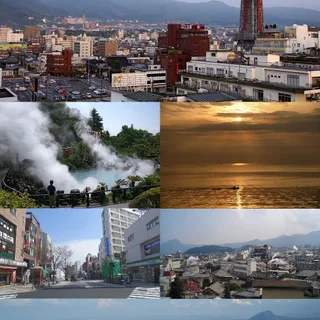
Beppu ( Beppu) is a city in Oita prefecture on the island of Kyushu, Japan. Famous for its visually stunning hot springs (the Hells of Beppu), Beppu is one of Japan's Three Great Hot Springs.
Introduction quoted from Wikivoyage, CC BY-SA
At a glance
- Best time to go
- March–April and October–November
- Getting around
- Bus · On foot
- Vetted picks
- 22 places to see, do, eat, and stay
- Real coverage
- 4 vetted creator sources — mostly locals
AI insights
Local-ledComputed from the Wikivoyage listings, transport section and mostly LOCAL creators' videos on this page
The most-viewed guide here is "【日本一の温泉⁉︎】温泉都市の別府!人気観光スポットや絶品グルメをご紹介!" by みやび〜優雅な日本案内 (66K views) — a solid first watch.
みやび〜優雅な日本案内 and 旅好きナースはれぱん harepan are creators from here, not a visiting channel — worth watching for what the guidebooks skip.
Getting around: by bus, on foot — the section below has the details straight from Wikivoyage.
14 of the places below list a real price from their own source — worth a scan before you budget the trip.
How these 22 picks are sourced
5 of 22 are named by a second, independent source — Japan Guide, Hangs with Christian and Lonely Planet — and each card names its own. The remaining 17 rest on the reference article alone: we list them because Wikivoyage or Wikipedia documents them, not because anyone else vouched for them. We also watched 4 creator videos, 2 of them from local channels rather than visiting ones. 16 of the 22 descriptions are quoted word for word from Wikivoyage under CC BY-SA rather than written by us, as is the introduction above — each of those cards says so. What we add is the checking, the corroboration above, and the choice of which places are worth your time at all.What we can't promise is that it's still true. Venues close, hours and prices change, and we don't re-check them — a place here closed for good and sat on this page for a year before anyone noticed. The insights are AI-written from these sources and can be wrong too. Confirm anything you'd be sorry to be wrong about before you set out. Terms.
Watch first
Ranked by views and how well each landed with the people who watched it, judged against the other coverage of this place — plus a local creator where we found one.

【日本一の温泉⁉︎】温泉都市の別府!人気観光スポットや絶品グルメをご紹介!
みやび〜優雅な日本案内 · 66K viewsLocalja

ULTIMATE BEPPU TRAVEL GUIDE | Top 6 things to do in Beppu, Oita Japan
We Go East · 111K views

【別府観光】地獄巡りとおすすめグルメ&絶景|女子旅|Beppu Oita
旅好きナースはれぱん harepan · 36K viewsLocalja

BEPPU TRAVEL GUIDE | 8 Must Do Experiences in Beppu, Oita
Hangs with Christian · 64K views
Best time to go
Best window: March–April and October–November
June, July, August and September are the months to avoid — very heavy rain. The window below is when it is genuinely pleasant.
Jan
Feb
Mar
Apr
May
Jun
Jul
Aug
Sep
Oct
Nov
Dec
IdealGoodOkayOff-season
Rated from ten years of daily temperature and rainfall recorded at this destination, via Open-Meteo's ERA5 reanalysis. Hover a month for its real numbers.
Getting around
By bus
The Hells and other sites can be easily reached via the tourist-centered bus system. Departures are outside JR Beppu Station. The Foreign Tourist Information Office inside JR Beppu Station sells one-day bus passes for ¥900 (¥700 students), which is likely the…
On foot
The town is walkable. The Hells may be a bit far for most to find it convenient. Though, walking is a possibility for those who don't mind it, and are not in a hurry.
Transport notes from Wikivoyage, CC BY-SA 4.0.
What to see
Places are listed from Wikivoyage and our own sourced research. Worth it means a second, independent source names the place too; “3 sources agree” means three or more do — and each card names them, so you can check. Single source means the opposite, said plainly: the reference article lists it and nothing else we checked does.
Umi Jigoku (Sea Hell)
Worth itAlso recommended by Lonely Planet and 1 other
Look into a steaming, cobalt-blue boiling pond, the standout stop of the Kannawa half of Beppu's hell circuit.
Vetted sources
Beppu Ropeway
Worth itAlso recommended by Hangs with Christian
When the weather is clear this ropeway will take you 800 m up to the top of Mt.
Description quoted from Wikivoyage, CC BY-SA
Vetted sources
Chinoike Jigoku (Blood Pond Hell)
Worth itAlso recommended by Japan Guide
See naturally red, iron-oxide-stained boiling water in the Shibaseki hell group, one of the most photographed of the seven hells.
Vetted sources
Oniishibozu Jigoku
Worth itAlso recommended by Japan Guide
Watch grey mud bubble up in rounded blobs that resemble a shaved monk's head, giving the hell its name.
Vetted sources
Global Tower
Single sourceAn observatory 100 m up in Beppu City that gives a full 360 degree view of the city.
Description quoted from Wikivoyage, CC BY-SA
Vetted sources
Beppu City Traditional Bamboo Crafts Center
Single sourceHas displays on bamboo craftsmanship and offers courses on making your own. Buses run from JR Beppu Station.
Description quoted from Wikivoyage, CC BY-SA
Vetted sources
What to do
Beppu onsen bathing
Worth itAlso recommended by Japan Guide
Soak in the actual hot-spring baths the city is famous for, as distinct from the hells, which are for viewing only.
Vetted sources
Yume Tamatebako
Single source1-gumi, Kannawa-kita-naka
A good place to start when you've never been to an Onsen before, as it's more like a public bath than a traditional Onsen.
Description quoted from Wikivoyage, CC BY-SA
Vetted sources
Hyōtan Onsen
Single sourceA large complex with indoor and outdoor baths using several types of wood and stones, sauna and steam rooms, a waterfall bath, and a dry sand bath. There is a restaurant inside the complex.
Description quoted from Wikivoyage, CC BY-SA
Vetted sources
Tanayu Onsen
Single sourcePart of Suginoi Palace Hotel
Many different baths and a sauna with stunning view of the city.
Description quoted from Wikivoyage, CC BY-SA
Vetted sources
Public baths
Single sourceSuch as Mushiyu (historical steam bath), Shibunoyu, Shoninyu, Jigokubaruyu, Netsunoyu, Sujiyu and Taninoyu.
Description quoted from Wikivoyage, CC BY-SA
Vetted sources
Takegawara Onsen
Single source16-23 Motomachi
A Meiji-era classic. The hot bath is extraordinarily hot, and signs gently remind you that the regulars like it that way. If you're not in a hurry, take a dip after you've been buried…
Description quoted from Wikivoyage, CC BY-SA
Vetted sources
Yukemuri Observation Platform
Single sourceTo see hot springs steam against mountains.
Description quoted from Wikivoyage, CC BY-SA
Vetted sources
What to eat
Hit Parade Club
Single sourceA uniquely Japanese experience, Hit Parade is an all you can eat buffet and all you can drink (alcoholic or not) American 1950s Dance Hall.
Description quoted from Wikivoyage, CC BY-SA
Vetted sources
Hanatokei Coffee and Tea
Single sourceDaisansou-Iriguchi bus stop (Oita Kotsu Bus toward Ritsumeikan)
Hanatokei is run by Mrs. Matsumoto, a devoted student of coffee beans and baking. The menu includes Japanese and Western style dishes.
Description quoted from Wikivoyage, CC BY-SA
Vetted sources
Toyotsune
Single sourceas you exit the East Exit of Beppu Train Station, it's opposite the station on the left side tucked in the corner
A small but cozy outlet. The place's friendly okami-san has an English menu (inquire inside). The place serves a good tendon (2 big prawns!) and it comes with a miso soup which is also the shop's specialty, with a stronger taste than the…
Vetted sources
Where to stay
Happy Neko
Single sourcein the Kannawa onsen area, 10 min walk from Jigoku
Budget accommodation in traditional Japanese style. There are many restaurants and onsens in the neighborhood. Free parking. They speak Japanese, English and Czech.
Description quoted from Wikivoyage, CC BY-SA
Vetted sources
Nogamihonkan Ryokan
Single sourceit's a few minutes from JR Beppu Station on Ekimae-dori; turn right at the first street once you see the post office across the street on your left
New, spacious and well-appointed rooms, with meals and 3 private and 2 public onsen available. There is a fluent English speaker on staff during the day-time hours.
Description quoted from Wikivoyage, CC BY-SA
Vetted sources
Yokoso Ryokan
Single source25 min. by bus from Beppu station
A traditional Japanese-style hotel equipped with hot springs baths and steam-powered ovens.
Description quoted from Wikivoyage, CC BY-SA
Vetted sources
Beppu Guest House
Single source5 minutes walking south east from Beppu station
Great location, nice staff, free laundry.
Vetted sources
OMOLOSO Hostel
Single source鉄輪東8組
Fantastically decorated rooms in a traditional Japanese-style home.
Description quoted from Wikivoyage, CC BY-SA
Vetted sources
Cabosu House Beppu Hamayu
Single source8 minutes walk from JR Beppu Station east exit
Clean and cozy. English-speaking desk staff. Has own public natural hot spring (free for guests).
Description quoted from Wikivoyage, CC BY-SA
Vetted sources
Build your day
Pick the places you want in Beppu, Japan and we will put them on a map in an order that does not cross the city twice.
Where to next
Nearby cities in Japan we’ve vetted too.
- FukuokaBirthplace of tonkotsu ramen, with riverside yatai food stalls lighting up at night.
- MiyajimaItsukushima Shrine's vermillion torii gate appears to float on the tide.
- HiroshimaThe Peace Memorial Park and A-Bomb Dome stand as a sobering historical landmark.
- NagasakiA layered history of Dutch trade and the Atomic Bomb Museum overlooking the harbour.
- OkayamaKorakuen, among Japan's three finest landscape gardens, sits beside a black-walled castle.
- YakushimaA UNESCO rainforest island of moss-covered ancient cedars.
Travel content from Wikivoyage, CC BY-SA 4.0. Encyclopedic context from Wikipedia, CC BY-SA 4.0. Videos via the YouTube Data API.