Gathering the gems worth your time…
Destination guide
Kobe
Japan
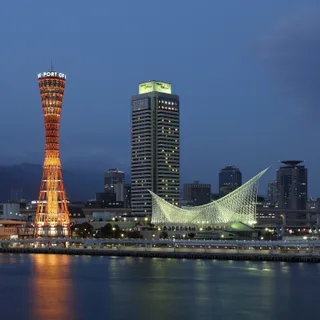
Kōbe (神戸) is a historic port city in the Hyogo Prefecture of Japan. Together with Kyoto and Osaka, it makes up the three-city agglomeration of Keihanshin (京阪神), Japan's largest after greater Tokyo.
Introduction quoted from Wikivoyage, CC BY-SA
Sources gathered & checked 5 days ago
At a glance
- Best time to go
- March and November
- Getting around
- Train · Subway · Light rail
- Vetted picks
- 29 places to see, do, eat, and stay
- Real coverage
- 9 vetted creator sources
AI insights
Computed from the Wikivoyage listings, transport section and YouTube view counts on this page
The most-viewed guide here is "【神戸旅行/2024】神戸観光で絶対行くべき場所!3時間で巡るおすすめコース/定番スポットと絶品グルメ編【ステーキ/神戸スイーツ/味噌だれ餃子/タピオカミルクティー/老祥記の豚まん】" by ackyの休日散歩 (363K views) — a solid first watch.
ackyの休日散歩 and 森脇梨々夏のりりちゃんねる💤 are creators from here, not a visiting channel — worth watching for what the guidebooks skip.
Getting around: by train, by subway, by light rail and 2 more — the section below has the details straight from Wikivoyage.
12 of the places below list a real price from their own source — worth a scan before you budget the trip.
How these 29 picks are sourced
6 of 29 are named by a second, independent source — Lonely Planet, Japan Guide and Michelin Guide, and 1 other — and each card names its own. The remaining 23 rest on the reference article alone: we list them because Wikivoyage or Wikipedia documents them, not because anyone else vouched for them. We also watched 9 creator videos, 4 of them from local channels rather than visiting ones. 24 of the 29 descriptions are quoted word for word from Wikivoyage under CC BY-SA rather than written by us, as is the introduction above — each of those cards says so. What we add is the checking, the corroboration above, and the choice of which places are worth your time at all.What we can't promise is that it's still true. Venues close, hours and prices change, and we don't re-check them — a place here closed for good and sat on this page for a year before anyone noticed. The insights are AI-written from these sources and can be wrong too. Confirm anything you'd be sorry to be wrong about before you set out. Terms.
Watch first
Ranked by views and how well each landed with the people who watched it, judged against the other coverage of this place — plus a local creator where we found one.

【神戸旅行/2024】神戸観光で絶対行くべき場所!3時間で巡るおすすめコース/定番スポットと絶品グルメ編【ステーキ/神戸スイーツ/味噌だれ餃子/タピオカミルクティー/老祥記の豚まん】
ackyの休日散歩 · 363K viewsLocalja
Kobe In A Day: What To Do And Eat In Kobe | Japan Travel Guide
internationally ME · 619K views

【地元】大好きな神戸をご案内!!
森脇梨々夏のりりちゃんねる💤 · 128K viewsLocalja

Guide to Kobe, Japan - 13 Things To Do 🇯🇵
Tokyo Creative · 230K views
【兵庫】神戸の超人気観光スポット15選
旅行の達人 · 155K viewsLocalja

THE Kobe Guide: Much MORE Than Kobe Beef!
PiQtour Japan · 34K views

【神戸観光】1泊2日の神戸旅行で神戸市のグルメと観光スポットを巡りました
bien旅行🤧国内旅行Vlogと観光スポット紹介 · 41K viewsLocalja

Kobe Japan Travel Guide: 11 Best Things To Do In Kobe Japan
10Minutes-Travel · 15K views

Kobe Japan Travel Guide 2026 | Best Things to See, Eat & Do!
PhatLife Project · 8K views
Best time to go
Best window: March and November
July is the month to avoid — very heavy rain. The window below is when it is genuinely pleasant.
Jan
Feb
Mar
Apr
May
Jun
Jul
Aug
Sep
Oct
Nov
Dec
IdealGoodOkayOff-season
Rated from ten years of daily temperature and rainfall recorded at this destination, via Open-Meteo's ERA5 reanalysis. Hover a month for its real numbers.
Getting around
By train
If you are planning to travel beyond city limits you might want to consider using the Kansai Thru Pass. ICOCA Card is a rechargeable card that can be used on rail, subway, and bus networks in Kansai area, Okayama, Hiroshima, Nagoya (Kintetsu) and Tokyo (JR…
By subway
Kōbe has two subway lines. The Kaigan Line runs along the coast, and the Seishin-Yamate Line runs toward the mountains. Both are more expensive than ordinary trains and unlikely to be of use for the traveler, except when connecting to Shin-Kōbe, the station…
By light rail
The automated Port Liner links Sannomiya to the reclaimed port district south of the city, and continues over the Kobe Sky Bridge to Kobe Airport. Likewise, the Rokko Liner links the Rokko Island area to JR Sumiyoshi station.
By bus
Kobe has a comprehensive city bus system, which is often your best choice when travelling to areas north of the city, away from the predominately east-west running train and subway lines.
On foot
Kōbe is narrow in the north-south direction, but long in the west-east direction. Since much of it is built on a hill, a reasonable itinerary is to take the bus up the hill, and walk down. If you get lost, find the mountains or the harbour.
Transport notes from Wikivoyage, CC BY-SA 4.0.
What to see
Places are listed from Wikivoyage and our own sourced research. Worth it means a second, independent source names the place too; “3 sources agree” means three or more do — and each card names them, so you can check. Single source means the opposite, said plainly: the reference article lists it and nothing else we checked does.
Kitano-cho former foreign settlement
Worth itAlso recommended by Lonely Planet and 1 other
Wander streets of Meiji-era Western-style houses built by the merchants and diplomats who arrived after Kobe's port opened in 1868.
Vetted sources
Chinatown
Worth itAlso recommended by Tokyo Creative
The original settlement of Chinese merchants.
Description quoted from Wikivoyage, CC BY-SA
Vetted sources
Takenaka Carpentry Tools Museum
Single sourceNext to Shin-Kobe station
A very nice exploration of hand carpentry tools, from the stone axes of Jomon age to the Western influenced tools of yesterday.
Description quoted from Wikivoyage, CC BY-SA
Vetted sources
Kitano Ijinkan
Single sourcewalking distance from either Sannomiya or Shin-Kobe stations
Kōbe's main attractions are the Ijinkan (foreign houses). These are 19th-century residences of Kobe's foreign traders, clustered in the Kitano area.
Description quoted from Wikivoyage, CC BY-SA
Vetted sources
Kobe Maritime Museum
Single sourceExhibits rich history of the port city with many photos, artifacts, models and some actual ships. Also houses Kawasaki World, a corporation museum for the Kawasaki Heavy Industries (no additional fees).
Description quoted from Wikivoyage, CC BY-SA
Vetted sources
Kyu-kyoryuchi
Single sourcenear Motomachi station (Hanshin Line or JR Line)
This is where foreign consulates and trading companies built their offices. Several 19th-century buildings have been converted into restaurants and shops.
Description quoted from Wikivoyage, CC BY-SA
Vetted sources
Kobe Overseas Chinese History Museum
Single sourceabout 300 m east of Minato Motomachi Station on the Kaigan subway line
A museum about the many Chinese merchants and tradespeople who settled in Kobe following the opening of the Port of Kobe to foreigners in 1868.
Description quoted from Wikivoyage, CC BY-SA
Vetted sources
What to do
Nunobiki Herb Gardens
Worth itAlso recommended by Lonely Planet
Ride the ropeway up the mountainside for city and harbor views that improve with every metre of ascent, ending among 200 species of herbs and flowers.
Vetted sources
Nunobiki Falls hike
Worth itAlso recommended by Lonely Planet
Walk the round-trip trail from historic Kitano-cho to the falls and reservoir in as little as 90 minutes.
Vetted sources
Fruit Flower Park
Single source35 min by bus from Sannomiya
Surrounded by a lot of flowers and greenery. Many people hold their wedding ceremonies here every year. In spring, the park becomes even more beautiful as about 10,000 tulips bloom.
Description quoted from Wikivoyage, CC BY-SA
Vetted sources
Sōraku-en Garden
Single source10 minute walk from Motomachi Station; 15-20 minutes from Sannomiya Station
A nice Japanese-style garden in the middle of the city. Very good value and a great attraction to see after going through the Ijinkan area.
Description quoted from Wikivoyage, CC BY-SA
Vetted sources
Kobe Luminarie
Single sourceJapan's best display of lights. Large, flamboyant light displays. The lights and the event itself have a deeper meaning, having begun in 1995, after the Great Hanshin Earthquake devastated the city of Kobe.
Description quoted from Wikivoyage, CC BY-SA
Vetted sources
Oji Zoo
Single sourcewalking distance from Hankyu Oji Koen station 王子公園駅 or JR Nada 灘駅 station
Besides animals, there is a mini amusement park with rides for young children
Description quoted from Wikivoyage, CC BY-SA
Vetted sources
MOSAIC
Single sourceKobe’s playground. There are restaurants, bars, a movie theatre, a shopping market, an amusement arcade and a little amusement park. Harbour cruises are offered, some of which go as far as the Akashi-Kaikyo Bridge
Description quoted from Wikivoyage, CC BY-SA
Vetted sources
Meriken Park
Single sourceLocated on the harborfront has a poignant memorial to the devastating Hanshin Earthquake in 1995, which killed 6,433 people.
Description quoted from Wikivoyage, CC BY-SA
Vetted sources
What to eat
Aragawa
Worth itAlso recommended by Michelin Guide
This two-Michelin-starred restaurant has charcoal-broiled its signature Sanda beefsteak the same way since 1967.
Vetted sources
Steakland
Worth itAlso recommended by Japan Guide
Queue for a counter seat to watch Kobe beef sizzle on the teppan without needing a reservation, the most accessible way to try it in the city.
Vetted sources
Torikizoku
Single source3 locations: near the Hankyu station, near the shrine, and just down the street from the Haagen-datz near the concrete statue park
Torikizoku is the most popular yakitori chain in Kansai.
Description quoted from Wikivoyage, CC BY-SA
Vetted sources
Naruto Taiyaki Honpo Hankyu Sannomiya-ekimae
Single sourceStopped here on camera: Tokyo Creative
near Sannomiya Station
A cramped and popular taiyaki shop. Serves 2 varieties of taiyaki, a fish-shaped cake: sweet potato and red bean paste.
Description quoted from Wikivoyage, CC BY-SA
Vetted sources
Modern Ark Pharm Cafe
Single sourcesouth of Sannomiya station
A vegetarian organic cafe that also serves alcohol and desserts.
Description quoted from Wikivoyage, CC BY-SA
Vetted sources
Kobe Beef Steak Ishida Kitanozaka
Single sourcenear Sannomiya Station
Rated one of the best places for Kobe beef.
Description quoted from Wikivoyage, CC BY-SA
Vetted sources
Grill Ippei
Single sourceSeveral branches near Sannomiya station, Motomachi station, and elsewhere
Specializes in yōshoku, or Japanized Western dishes. Specialities include Ebi furai (breaded shrimp), kaki furai (breaded oyster), hamburger steaks and tonkatsu (pork cutlets).
Description quoted from Wikivoyage, CC BY-SA
Vetted sources
Cafe Terrasse de Paris
Single source4-9-2 Kitanocho, Chuo-ku
A French restaurant with a romantic view.
Description quoted from Wikivoyage, CC BY-SA
Vetted sources
Where to stay
Kobe Portopia Hotel
Single sourceImmediately adjacent Shimin Hiroba Station
This is a high-rise international hotel on Portopia Island mainly of interest to business travelers or those attending events at the International Convention Center nextdoor. Includes spa and pool at additional cost.
Description quoted from Wikivoyage, CC BY-SA
Vetted sources
Sannomiya Terminal Hotel
Single sourceStopped here on camera: Tokyo Creative
Chuo-ku Kumoidori 8-1-2
Directly over the Sannomiya station, with reasonable pricing, simple but adequate facilities and rather small rooms.
Description quoted from Wikivoyage, CC BY-SA
Vetted sources
Hotel Pearl City Kobe
Single source7 Chome-5-1 Minatojima Nakamachi
An older mid-range hotel on the artificial island next to the Kobe airport (accessible by the Port Liner).
Description quoted from Wikivoyage, CC BY-SA
Vetted sources
Hotel Crown Palais Kobe
Single source1-3-5 Higashi-kawasaki-cho, Chuo-ku
Overlooks Mount Rokko and Osaka Bay. The location near JR Kōbe station is good.
Description quoted from Wikivoyage, CC BY-SA
Vetted sources
Kobe Kua House
Single source8-minute walk from Sannomiya station (Hankyu, Hanshin, JR Line)
Spa and capsule hotel with a floor exclusively for women
Description quoted from Wikivoyage, CC BY-SA
Vetted sources
Kobe Stockers' Share House at Uozaki
Single source10-minute walk from Hanshin Uozaki Station, a 10-minute train ride from Sannomiya
Cosy little hostel for stays of at least 2 weeks.
Description quoted from Wikivoyage, CC BY-SA
Vetted sources
Build your day
Pick the places you want in Kobe, Japan and we will put them on a map in an order that does not cross the city twice.
Where to next
Nearby cities in Japan we’ve vetted too.
- OsakaJapan's street-food capital, famed for takoyaki and okonomiyaki around the neon Dotonbori canal.
- NaraBowing wild deer roam Nara Park beside Todai-ji, home to a giant bronze Buddha.
- KyotoOver a thousand temples and shrines, including Fushimi Inari's endless torii gates.
- OkayamaKorakuen, among Japan's three finest landscape gardens, sits beside a black-walled castle.
- NagoyaKnown for hitsumabushi grilled eel and the reconstructed Nagoya Castle.
- KanazawaKenroku-en, one of Japan's three great gardens, sits beside a preserved samurai district.
Travel content from Wikivoyage, CC BY-SA 4.0. Encyclopedic context from Wikipedia, CC BY-SA 4.0. Videos via the YouTube Data API.