Gathering the gems worth your time…
Destination guide
Nara
Japan
Nara () is an ancient capital city in Nara Prefecture, Kansai region of Japan. Overshadowed by its more famous neighbor Kyoto, Nara is omitted from many a time-pressed tourist's itinerary.
Introduction quoted from Wikivoyage, CC BY-SA
Sources gathered & checked yesterday
At a glance
- Best time to go
- March and November
- Getting around
- Bus · On foot · Taxi
- Vetted picks
- 24 places — 1 backed by 3+ independent sources
- Real coverage
- 5 vetted creator sources
AI insights
Computed from the Wikivoyage listings, transport section and YouTube view counts on this page
The most-viewed guide here is "【奈良】絶対に外せない観光スポットを20ヶ所一気に紹介します!" by ゆめたび全国版【観るガイドブック】 (393K views) — a solid first watch.
ゆめたび全国版【観るガイドブック】 and りっちゃんねる【グルメ旅】 are creators from here, not a visiting channel — worth watching for what the guidebooks skip.
Getting around: by bus, on foot, by taxi and 1 more — the section below has the details straight from Wikivoyage.
12 of the places below list a real price from their own source — worth a scan before you budget the trip.
How these 24 picks are sourced
2 of 24 are named by a second, independent source — Lonely Planet, Sunny in Japan and Ralph & Sam, and 1 other — and each card names its own. The remaining 22 rest on the reference article alone: we list them because Wikivoyage or Wikipedia documents them, not because anyone else vouched for them. We also watched 5 creator videos, 2 of them from local channels rather than visiting ones. 21 of the 24 descriptions are quoted word for word from Wikivoyage under CC BY-SA rather than written by us, as is the introduction above — each of those cards says so. What we add is the checking, the corroboration above, and the choice of which places are worth your time at all.What we can't promise is that it's still true. Venues close, hours and prices change, and we don't re-check them — a place here closed for good and sat on this page for a year before anyone noticed. The insights are AI-written from these sources and can be wrong too. Confirm anything you'd be sorry to be wrong about before you set out. Terms.
Watch first
Ranked by views and how well each landed with the people who watched it, judged against the other coverage of this place — plus a local creator where we found one.

【奈良】絶対に外せない観光スポットを20ヶ所一気に紹介します!
ゆめたび全国版【観るガイドブック】 · 393K viewsLocalja
![A day trip to NARA 🦌 Nara Deer Park, Todai-ji Temple, Viral Mochi 🍡 [Nara, Japan] 🇯🇵](https://i.ytimg.com/vi/mGyy6xcXPfI/hqdefault.jpg)
A day trip to NARA 🦌 Nara Deer Park, Todai-ji Temple, Viral Mochi 🍡 [Nara, Japan] 🇯🇵
Sunny in Japan · 156K views

【地元民が案内】ならまちで見つけた絶品グルメ&観光スポット巡り【ならまち奈良グルメ】
りっちゃんねる【グルメ旅】 · 37K viewsLocalja

Nara Japan Vlog 🇯🇵 Nara Deer Park, Osaka Day Trip, Things to Do in Nara | Japan Travel Guide 2025
Ralph & Sam · 63K views

Things to do in Nara Japan / Nara deer park, Street Food, Hotel / Travel Guide
SAMURAI JUNJIRO Channel【SJC】 · 45K views
Best time to go
Best window: March and November
July is the month to avoid — very heavy rain. The window below is when it is genuinely pleasant.
Jan
Feb
Mar
Apr
May
Jun
Jul
Aug
Sep
Oct
Nov
Dec
IdealGoodOkayOff-season
Rated from ten years of daily temperature and rainfall recorded at this destination, via Open-Meteo's ERA5 reanalysis. Hover a month for its real numbers.
Getting around
By bus
You can get a Nara Bus Pass for unlimited travel on Nara Kotsu and Nara Gurutto buses plus discounts on museum admissions. 1-day bus pass covering most attractions in Nara area costs ¥500 for adults and ¥250 for child.
On foot
Once within Nara Park, you can walk to almost all the other major sites. The conventional round course (from Kintetsu Nara Station to Kōfuku-ji, Nara National Museum, Tōdai-ji, Kasuga Taisha and back to Kintetsu Nara Station) is about 6 km long, a pleasant…
By taxi
Taxis are available at Nara but those who do not know Japanese may find it difficult to make the taxi driver understand where they want to go. You can hail a taxi through Uber app.
By bicycle
Nara's flat, spread-out nature makes it a great fit for cycling. Nara Rent-a-Cycle near Kintetsu Nara stn is open 24/7 and rents out basic bikes from ¥1000/day.
Transport notes from Wikivoyage, CC BY-SA 4.0.
What to see
Places are listed from Wikivoyage and our own sourced research. Worth it means a second, independent source names the place too; “3 sources agree” means three or more do — and each card names them, so you can check. Single source means the opposite, said plainly: the reference article lists it and nothing else we checked does.
Nara Park
4 sources agreeAlso recommended by Lonely Planet and 3 others
Hundreds of tame sika deer, considered sacred messengers, roam freely and bow for crackers.
Vetted sources
Todai-ji
Worth itAlso recommended by Lonely Planet and 1 other
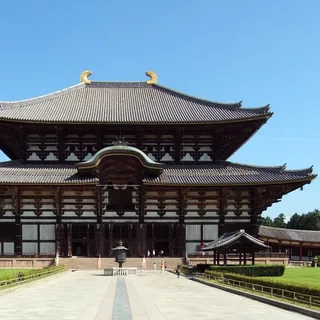
Houses a 15-metre bronze Great Buddha inside one of the world's largest wooden buildings.
Vetted sources
Tōdai-ji
Single sourceHome to the famous Great Buddha (Daibutsu, 大仏), the largest Buddha statue in Japan and one of the largest in the world.
Description quoted from Wikivoyage, CC BY-SA
Vetted sources
Nara National Museum
Single source50 Noborioji-cho
This museum has one of the world's best collections of Buddhist art and changing exhibitions. The National Treasure Hall has an impressive collection of statues.
Description quoted from Wikivoyage, CC BY-SA
Vetted sources
Kōfuku-ji
Single source登大路町48
This temple has a three-story and a five-story pagoda; historically, the latter has contended with Kyoto's Toji for the title of Tallest Pagoda in Japan, although Kofuku-ji seems to have surrendered for now.
Description quoted from Wikivoyage, CC BY-SA
Vetted sources
Himuro Shrine
Single source10-minute walk from the Kintetsu Nara station; across the street from the Nara National Museum
A shrine dating from 1217 and home to several fine cherry trees.
Description quoted from Wikivoyage, CC BY-SA
Vetted sources
Sarusawa Pond
Single source登大路町49
This small pond at the east end of Sanjō-dōri with Nara Park behind or Naramachi to its south is a very popular viewing spot for Kōfukuji.
Description quoted from Wikivoyage, CC BY-SA
Vetted sources
Ukimidō
Single sourceA hexagonal building built on Sagiike Pond in Nara Park so that it appears to float on water.
Description quoted from Wikivoyage, CC BY-SA
Vetted sources
What to do
Nara Visitor Center & Inn
Single source3 Ikeno-cho· Free
Learn basic Japanese calligraphy or origami. They'll pick out kanji that match the sound of your name so you can learn to write them with a calligraphy brush pen.
Description quoted from Wikivoyage, CC BY-SA
Vetted sources
Naramachi
Single source10 minutes on foot south of Kintetsu Nara station
The neighborhood, founded in the 8th century when Heijōkyō was the capital of Japan, today contains several small museums, machiya (町家) (traditional Japanese merchant houses from Edo Period), unique cafes and restaurants.
Description quoted from Wikivoyage, CC BY-SA
Vetted sources
Shuni-e (Omizu-tori)
Single sourceNigatsu-dō, Todai-ji
An annual Buddhist memorial service that has been carried out first in 752 AD and continues today without a year off. Priests run around the Nigatsu-dō carrying large flaming torches.
Description quoted from Wikivoyage, CC BY-SA
Vetted sources
Mount Wakakusa Fire Festival
Single sourceWakakusayama, Nara Park
Great fireworks and the dry grass on the slopes of this mountain is set on fire by two temples. The size of the burn depends on how dry the grass is.
Description quoted from Wikivoyage, CC BY-SA
Vetted sources
Nara Tōka-e
Single sourceAn annual light festival. 10,000 candles illuminate the area around Nara Park and major temples.
Description quoted from Wikivoyage, CC BY-SA
Vetted sources
Deer-horn Cutting Ceremony
Single sourceRokuen, Nara Park
Deer have their horns cut to prevent people from being injured.
Description quoted from Wikivoyage, CC BY-SA
Vetted sources
What to eat
Maguro Koya
Single sourceexit Kintetsu Nara station, and you'll see a fountain of a Buddhist monk; cross the lights to the other side of the big street there, and go into the small street that runs perpendicular to the big street. Walk a couple hundred meters, passing an am/pm convenience store on your right, and you will see an Asahi beer sign on the road, with the words まぐろ小屋 written on it on your left side
A tiny hole-in-the-wall place that specializes in tuna.
Description quoted from Wikivoyage, CC BY-SA
Vetted sources
Totogin
Single sourceinside Higashimuki Shopping Street arcade off the south-east entrance near the Kintetsu Nara stop
A conveyor-belt sushi restaurant that won't break your wallet.
Description quoted from Wikivoyage, CC BY-SA
Vetted sources
Hiraso
Single sourcesouth of Sarusawa Pond
A nice sampling of local foods such as kakinohazushi and chagayu (tea gruel, which tastes better than it sounds) are included in dinner sets miyoshino and heijou. An English picture menu available.
Description quoted from Wikivoyage, CC BY-SA
Vetted sources
Okaru
Single sourceinside Higashimuki Shopping Street arcade
A restaurant specialized in okonomiyaki (お好み焼き), a pan-fried cabbage cake with selection of meat. Okonomiyaki is definitely shortlisted on Kansai people's most beloved dishes.
Description quoted from Wikivoyage, CC BY-SA
Vetted sources
Sanshū-tei
Single sourceIn the Isui-en Garden (依水園)
It's worth a visit more for the attractive old house and garden than the menu, which consists of two very traditional dishes: mugi tororo (plain rice with ground yam, ¥1200), and unagi tororo (the…
Description quoted from Wikivoyage, CC BY-SA
Vetted sources
Yatagarasu
Single source13-1 Hayashi-kōji-cho
Fresh poultry from local farms cooked and served in many different ways (eg. grilled, fried, even raw) with a variety of either local or other regional sake available.
Description quoted from Wikivoyage, CC BY-SA
Vetted sources
Where to stay
Nara Hotel
Single source1096 Takabatake-cho
Classic western-style hotel of deluxe class, since 1909.
Description quoted from Wikivoyage, CC BY-SA
Vetted sources
Ryokan Matsumae
Single sourceoff Sanjo-dori, close to Sarusawa Pond and Gango-ji; about 7 minutes from Kintetsu Nara Station and 15 minutes from JR Nara
The owners profess to be familiar with Buddha statue carving and calligraphy. Free wifi. No dinner, but you can get a Japanese breakfast—reserve it the night before. (A Western breakfast is available too.)
Vetted sources
Nara Washington Hotel Plaza
Single sourceon Sanjō Avenue
Nationwide western-style hotel chain. Rooms have internet at no extra charge.
Description quoted from Wikivoyage, CC BY-SA
Vetted sources
Tempyō Ryokan
Single sourcein the Higashimuki Shopping Street Arcade
Japanese and western-style rooms available.
Description quoted from Wikivoyage, CC BY-SA
Vetted sources
Build your day
Pick the places you want in Nara, Japan and we will put them on a map in an order that does not cross the city twice.
Where to next
Nearby cities in Japan we’ve vetted too.
- OsakaJapan's street-food capital, famed for takoyaki and okonomiyaki around the neon Dotonbori canal.
- KyotoOver a thousand temples and shrines, including Fushimi Inari's endless torii gates.
- KobeHome of the original Kobe beef, plus a hillside port skyline.
- NagoyaKnown for hitsumabushi grilled eel and the reconstructed Nagoya Castle.
- OkayamaKorakuen, among Japan's three finest landscape gardens, sits beside a black-walled castle.
- TakayamaAn Edo-period old town of dark-wood merchant houses in the Japanese Alps, famed for Hida beef.
Travel content from Wikivoyage, CC BY-SA 4.0. Videos via the YouTube Data API.